
Expert Tire Balancing in Hurst, TX for a Smoother, Safer Ride
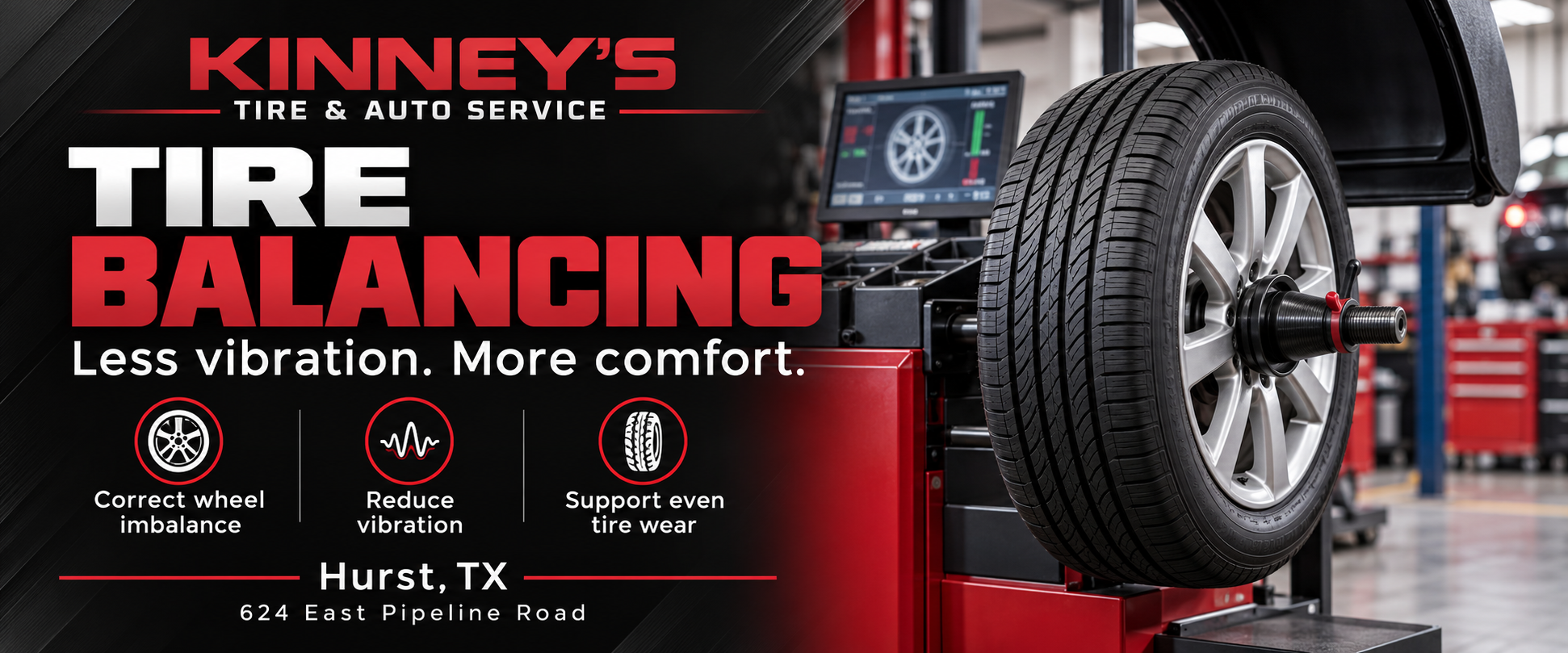
Tire Balancing in Hurst, TX
A steering wheel that shakes on the highway can turn an ordinary drive into an uncomfortable trip. If you feel vibration through the wheel, seat, or floor, an out-of-balance tire and wheel assembly may be contributing to the problem.
Kinney’s Tire & Auto Service provides tire balancing in Hurst, TX, to help correct imbalance-related vibration and improve ride comfort. Visit us at 624 East Pipeline Road for a balance check, service for newly installed tires, or help with a shake that has become more noticeable.
Our team can inspect your tires and wheels and determine whether balancing is appropriate or another concern needs attention.
What Is Tire Balancing?
Tire balancing, also called wheel balancing, corrects uneven weight distribution in a tire and wheel assembly. Even a small imbalance can generate vibration as the assembly rotates, particularly at highway speeds.
A computerized balancing machine measures the imbalance and identifies where corrective weights should be placed. The technician adjusts the weights and checks the assembly again. Correcting an imbalance can reduce vibration and help limit the irregular tread wear it can cause.
Balancing is an important part of new tire installation. The tire and wheel must be balanced together, even when the tire is brand new.
Signs Your Tires May Need Balancing
Have your tires and wheels inspected if you notice:
- Steering wheel vibration: A shake develops at certain road speeds or becomes more noticeable during highway driving.
- Vibration through the cabin: You feel a recurring disturbance through the seat or floor.
- A change after tire service: The vehicle rides differently following installation, remounting, or rotation.
- A missing wheel weight: A weight that comes loose can change the assembly’s balance.
- Irregular tread wear: Uneven wear can involve balance, inflation, alignment, or suspension concerns.
These symptoms are starting points for an inspection, not a diagnosis by themselves. Tell us when the vibration begins and whether braking or acceleration changes it. If the vehicle pulls to one side, tire pressure, tire condition, alignment, and other components may need evaluation.
How Does a Tire Balancing Machine Work?
The wheel assembly is mounted and centered on the balancing machine. As it spins, sensors measure imbalance and the machine calculates the amount and placement of corrective weight.
A technician applies or adjusts suitable wheel weights, then spins the assembly again to check the result. Accurate centering and correct weight placement matter: an assembly that is mounted incorrectly on the machine can produce misleading readings.
Static Balance vs. Dynamic Balance
Static imbalance occurs when the assembly’s center of mass is offset from its rotation axis. It can create an up-and-down disturbance as the wheel turns. Static balancing addresses this imbalance in a single correction plane.
Dynamic balancing evaluates the spinning assembly in two correction planes, accounting for both static imbalance and the side-to-side wobble associated with couple imbalance. Computerized dynamic balancing is commonly used for passenger-vehicle wheels.
Both types of imbalance can affect a moving vehicle. The distinction concerns how weight is distributed and corrected.
What to Expect During Tire Balancing
- Discuss the symptoms. We review what you feel, when it happens, and whether recent tire work or a road impact preceded it.
- Inspect the tires and wheels. Visible damage, irregular wear, inflation, and wheel condition help determine the appropriate service.
- Measure the imbalance. Each assembly being serviced is removed and properly mounted on the balancing machine.
- Adjust and recheck. Corrective weights are positioned as needed, and the assembly is checked again.
- Reinstall and assess the concern. Wheels are reinstalled using the appropriate tightening specifications. Any remaining vibration may require further diagnosis.
What If Vibration Remains After Balancing?
A tire can have acceptable weight balance and still contribute to vibration. Tire uniformity, wheel shape, mounting concerns, or a problem elsewhere in the vehicle may be involved.
Road force testing adds an evaluation under load. A roller presses against the rotating tire to measure force variation. Depending on the findings, repositioning the tire on the wheel, known as match mounting, may improve the assembly’s ride characteristics.
If previous balancing has not resolved the problem, ask our team whether road force testing is appropriate and available for your vehicle. Balancing cannot repair structural tire damage, straighten a bent wheel, or fix worn steering and suspension components.
Tire Balancing, Rotation, and Wheel Alignment
These services address different parts of tire maintenance:
- Balancing corrects uneven weight distribution in a rotating tire and wheel assembly.
- Tire rotation moves tires between approved positions to help distribute wear more evenly.
- Wheel alignment adjusts wheel angles to the vehicle manufacturer’s specifications.
A rotation does not automatically include balancing, and an alignment will not correct a true weight imbalance. If you are booking routine tire maintenance and have noticed a shake, mention it when you schedule.
When Should You Have Your Tires Balanced?
Have tires balanced when they are first mounted and when they are removed from the wheels and remounted. Arrange a balance check when vibration develops, a wheel weight is lost, or the ride changes after tire service.
After a pothole or curb impact, an inspection should also check for tire and wheel damage. For ongoing maintenance, follow your vehicle and tire manufacturers’ recommendations and consider the condition of the assemblies.
Tire Service Deals and Payment Options
Planning a visit? Check out our offers for current tire and automotive service promotions. Review each offer’s eligible services, expiration date, and terms, and ask which savings apply to your appointment.
If your inspection identifies a need for replacement tires or additional repairs, explore our auto repair financing and payment options for eligible purchases. Availability, approval requirements, and terms vary by provider.
Tire Balancing FAQs
Can new tires be out of balance?
Yes. New tires need balancing with the wheels they are mounted on. If vibration remains after installation, the assemblies and vehicle may need further evaluation.
Will balancing fix uneven tire wear?
Balancing can correct an imbalance that contributes to wear, but it cannot replace missing tread or reverse an established wear pattern. If replacement is needed, our Hurst tire shop can help you compare suitable options.
How much does tire balancing cost?
The price depends on the number of assemblies being serviced and any additional diagnostic work needed. Contact Kinney’s with your vehicle details and symptoms to request an estimate.
Schedule Tire Balancing in Hurst, TX
Get help with an uncomfortable ride at Kinney’s Tire & Auto Service, 624 East Pipeline Road, Hurst, TX 76053. Request an appointment online, call 817-282-2244, or contact our Hurst auto service team to discuss your tire concerns.